

If you’re taking semaglutide or another GLP-1 medication for weight loss, a few common mistakes can make treatment less effective or increase unwanted side effects. Eating large, high-fat meals, failing to stay hydrated, or relying on medication without making healthy lifestyle changes can affect your experience and long-term results. Understanding what to avoid can help you get the most from treatment while supporting safe, sustainable weight loss.
The most successful GLP-1 programs combine medication with personalized nutrition, exercise, and ongoing medical monitoring, rather than relying solely on a prescription. Below, we’ll cover 7 common mistakes to avoid and explain how simple nutrition, exercise, and medication habits can help you stay on track.
What Should You Not Do While on Semaglutide or Other GLP-1s?
If you’re using a GLP-1 medication such as semaglutide or tirzepatide, here are 7 common mistakes to avoid.
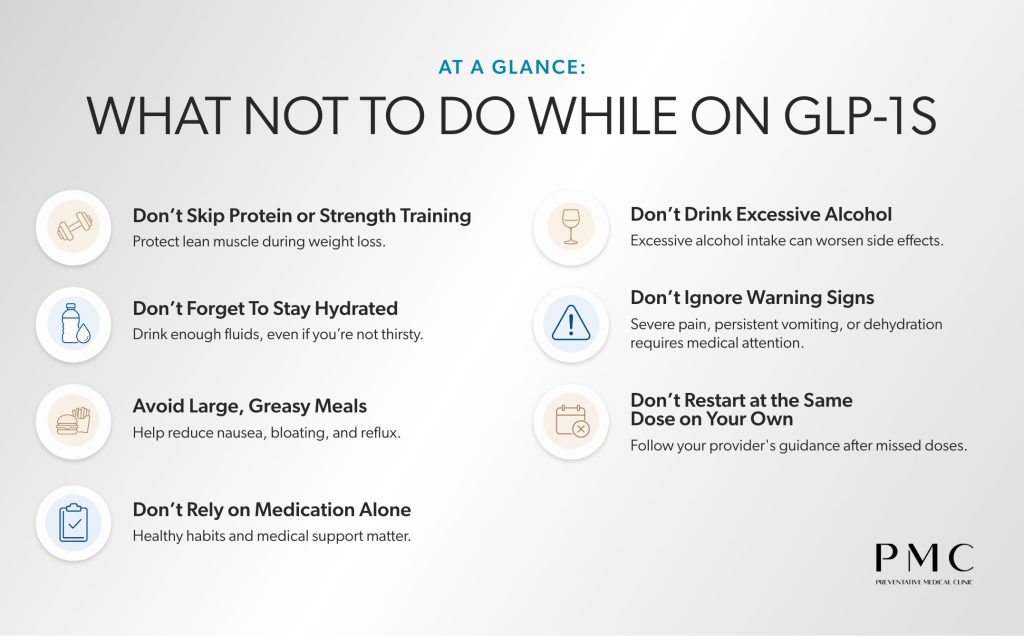
1. Don’t Skip Protein or Strength Training
One of the biggest misconceptions about GLP-1 medications is that all weight loss is good weight loss. However, the rapid weight loss that often occurs when taking GLP-1 medications can include the loss of valuable muscle tissue if you aren’t intentional about preserving it. Muscle plays an important role in maintaining your metabolism, supporting daily function, and helping you maintain your results over time.
That’s why we encourage every patient to prioritize:
- Lean protein at every meal
- Regular resistance or strength training
- Adequate daily calories to support healthy muscle maintenance
At PMC, we use advanced InBody and ShapeScale® technology to evaluate your body composition, showing how much fat you’re losing while monitoring lean muscle mass. This gives us a much clearer picture of your progress and allows us to make personalized adjustments throughout your program.
2. Don’t Eat Greasy, Fried, or Overly Large Meals
GLP-1 medications naturally slow digestion. While this helps you feel full longer, it also means your stomach processes food more slowly than before. Heavy, greasy, fried, or oversized meals can overwhelm your digestive system and increase common side effects such as:
- Nausea
- Heartburn or reflux
- Bloating
- Stomach discomfort
Focus instead on smaller, balanced meals throughout the day. Lean proteins, vegetables, fruits, healthy fats, and high-fiber carbohydrates are often easier to tolerate while providing the nutrition your body needs during weight loss.
Many patients also find that eating slowly and stopping when comfortably satisfied helps minimize digestive discomfort.
3. Don’t Forget Hydration and Electrolytes
Many people naturally eat and drink less once they begin GLP-1 therapy. While reduced appetite is expected, inadequate hydration can become a problem, especially if you’re experiencing nausea or constipation.
Dehydration may contribute to:
- Fatigue
- Headaches
- Dizziness
- Constipation
- Reduced exercise performance
Make hydration part of your daily routine, even when you don’t feel thirsty. Water should be your primary beverage, and electrolyte-containing drinks may be helpful during periods of decreased food intake or increased physical activity.
4. Don’t Drink Excessive Alcohol
Combining alcoholic drinks with GLP-1 medications may increase nausea, worsen dehydration, contribute unnecessary calories, and make it more difficult to achieve your long-term weight loss goals. It can also make it harder to recognize your body’s natural hunger and fullness signals.
While moderate alcohol consumption may be appropriate for some patients, it’s important to discuss your habits with your provider so they can tailor recommendations to your health history and treatment plan.
5. Don’t Stop and Restart at the Same Dose Without Provider Guidance
Missing a dose occasionally because of travel, illness, or scheduling conflicts isn’t a problem. However, stopping your medication for an extended period and then restarting at your previous dose can increase your risk of gastrointestinal side effects because your body has lost some of its tolerance.
At PMC, our providers carefully and gradually adjust each patient’s medication dose based on their response, progress, and side effects. If your treatment is interrupted, we’ll help determine the safest way to restart your medication instead of guessing on your own.
This personalized approach is one of the reasons medical supervision remains such an important part of successful GLP-1 therapy.
6. Don’t Think Medication Alone Is the Entire Program
The most successful patients understand that GLP-1 medications are tools within a comprehensive weight loss program. Long-term success comes from combining medication with healthy lifestyle habits and ongoing medical guidance.
Our comprehensive weight loss program includes:
- Customized medication dosing and titration
- Regular provider follow-up visits
- InBody and ShapeScale body composition tracking
- Nutrition recommendations
- Exercise guidance focused on preserving muscle
- Ongoing accountability and support
As your body changes, your goals may evolve. After significant weight loss, some patients choose body contouring treatments to address loose skin or stubborn areas that diet and exercise alone can’t improve. Because PMC offers both wellness and advanced aesthetic services under one roof, we can recommend treatments that complement your results when appropriate.
7. Don’t Ignore Warning Symptoms
Most GLP-1 side effects are mild and improve as your body adjusts to treatment. However, certain symptoms should never be ignored.
You should contact your healthcare provider promptly if you experience:
- Severe or persistent abdominal pain
- Repeated vomiting
- Signs of dehydration
- Pain in the upper right abdomen that could indicate gallbladder problems
- Symptoms that prevent you from eating or drinking adequately
Access to experienced medical providers throughout your weight loss journey provides peace of mind and helps ensure concerns are addressed promptly.
Comprehensive Medical Weight Loss
GLP-1 weight loss medications have helped many women and men lose excess weight by reducing appetite, slowing stomach emptying, and making it easier to consume fewer calories. While these medications can be incredibly effective, they’re only one piece of a successful weight loss journey.
As part of the Kohll family’s 70-plus-year legacy of healthcare excellence, we create personalized weight loss plans that combine customized GLP-1 dosing, ongoing provider monitoring, body composition analysis, nutrition guidance, and lifestyle support to help you look and feel your best. Our goal is to help you achieve healthier, longer-lasting results.
Because every patient is different, we create individualized treatment plans that evolve with your progress, not a one-size-fits-all program.
Start With a Consultation
Not sure whether semaglutide or another weight loss approach is right for you? Take our What Weight Loss Treatment Is Right for You? quiz to learn which options may best fit your goals and lifestyle. You can also contact us at (402) 408-0017 or request a consultation using the online form to learn whether you’re a candidate for a medically supervised, comprehensive weight loss program.
Keep in mind that each patient is unique, and your results may vary.
Leave a Reply