

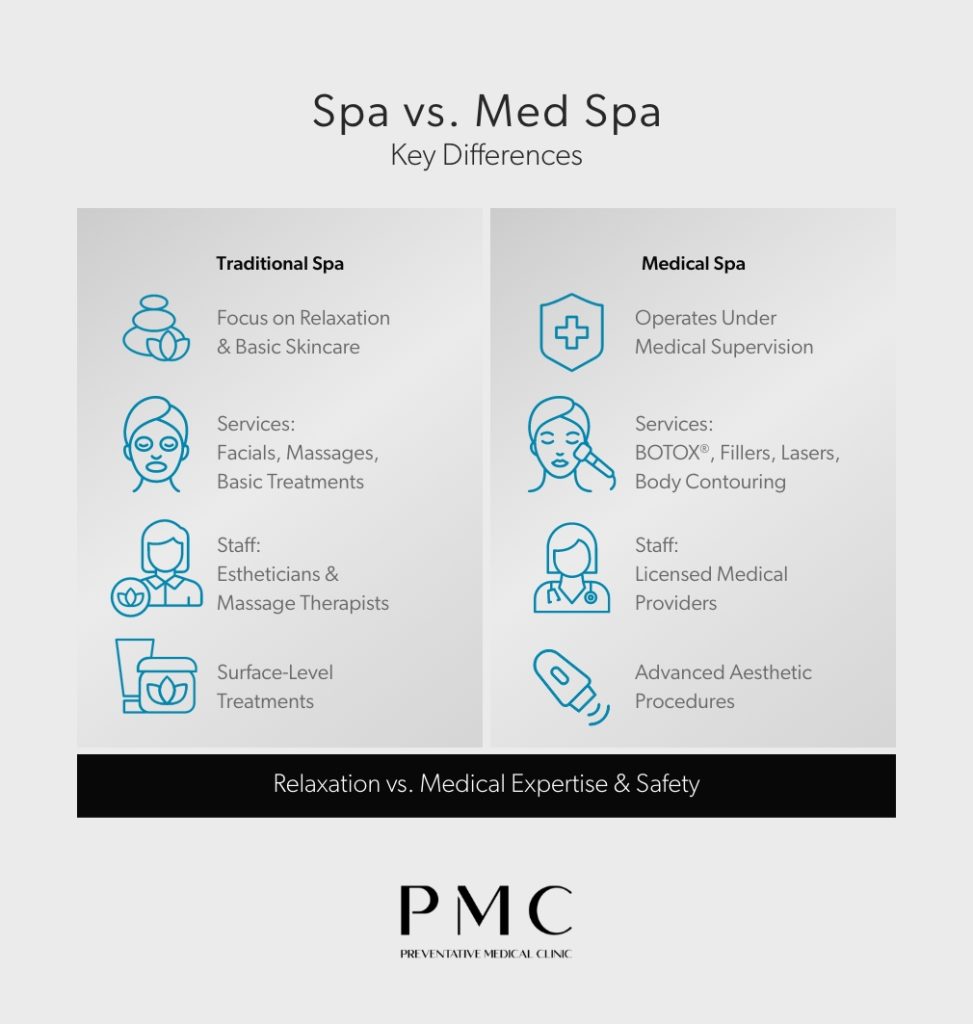
The difference between a spa and a med spa is the level of medical oversight and the types of treatments offered. Traditional spas focus on relaxation and surface-level skincare services, while medical spas operate under licensed medical supervision and provide advanced aesthetic treatments that affect deeper layers of the skin.
Understanding this distinction can help you choose the right environment for your goals—whether you want a relaxing skincare experience or medically guided treatments designed to address structural skin concerns.
Spa vs. Medical Spa: What’s the Difference?
While both environments offer services designed to improve skin health and appearance, the professionals performing the treatments and the clinical structure behind those services can vary significantly. Traditional spa treatments are typically performed by licensed estheticians or massage therapists, while medical spa procedures are delivered by trained aesthetic providers working under the supervision of a physician or other licensed medical professional.
What Is a Traditional Spa?
A traditional spa is primarily designed for relaxation and surface-level skin care. Services typically include massages, facials, body wraps, and other treatments intended to promote comfort and temporary skin improvement.
These experiences can be beneficial for stress relief and maintaining general skin health. However, traditional spas typically focus on treatments that affect only the skin’s surface layers and do not require physician oversight.
That’s why traditional spas generally do not offer treatments that alter deeper skin structures or underlying anatomy. Their role is largely centered on wellness, relaxation, and cosmetic maintenance.
What Is a Medical Spa?
A medical spa, such as Preventative Medical Clinic, bridges the gap between traditional spa services and medical aesthetic care. These facilities operate under the supervision of licensed medical professionals and offer advanced procedures that require medical training and clinical protocols.
Common medical spa treatments include:
- Neuromodulators such as BOTOX®
- Dermal fillers such as JUVÉDERM®
- Laser skin rejuvenation
- RF microneedling
- Body contouring treatments
- Advanced skin resurfacing
These procedures work within the skin’s deeper layers and underlying tissues. Patient safety depends on proper medical evaluation, understanding facial anatomy, and the ability to manage potential complications.
Medical spas are structured more like a clinical practice than a traditional spa. Providers review medical histories, assess treatment candidacy, and tailor plans to each patient’s goals and anatomy. This medical oversight helps ensure treatments are both safe and effective.
Why Medical Oversight Matters
Medical supervision plays an important role in advanced aesthetic treatments. Injectables, energy-based treatments, and advanced resurfacing procedures require a thorough understanding of anatomy and skin physiology. Appropriate training and clinical protocols minimize risk and produce optimal results.
At a properly structured medical spa, providers evaluate:
- Your medical history
- Skin type and underlying conditions
- Previous treatments or procedures
- Potential contraindications
These assessments help providers design a personalized treatment plan that prioritizes safety while achieving the desired aesthetic outcome. Medical oversight also ensures that if complications occur, such as bruising, vascular issues, or unexpected reactions, trained providers have the protocols and experience needed to address them promptly.
Advanced Treatment Technology
Another major difference between spas and medical spas involves the technology used. Traditional spas typically use skincare products, light exfoliation devices, or basic facial equipment. These tools focus on superficial improvements such as hydration, cleansing, and gentle resurfacing.
Medical spas, on the other hand, often invest in advanced treatment platforms that deliver deeper, longer-lasting results. These technologies may include:
- Medical-grade laser systems
- Radiofrequency microneedling devices
- Advanced skin tightening platforms
- Body contouring technologies
Because these devices interact with deeper skin layers, proper training and supervision are essential. The benefit is that medical spa treatments can address concerns such as wrinkles, skin laxity, pigmentation, acne scars, and other structural skin changes that traditional spa services cannot fully correct.
Safety Protocols and Patient Evaluation
Safety is one of the defining features of a true medical spa. Before undergoing advanced treatments, patients should receive a thorough consultation. This evaluation allows providers to determine the most appropriate approach while identifying potential risk factors.
Medical spas also maintain established safety protocols, including:
- Detailed patient documentation
- Medical-grade sanitation standards
- Emergency and complication management procedures
- Ongoing provider education and training
These measures help ensure that aesthetic treatments are performed responsibly and consistently.
Choosing the Right Environment for Your Goals
Both traditional spas and medical spas serve valuable roles in aesthetic care, but they serve different purposes. A traditional spa may be the right choice if your goal is relaxation, stress relief, or maintaining a simple skincare routine. Facials, massages, and body treatments can be excellent ways to support overall wellness.
However, if you are interested in treatments that address signs of aging, improve skin structure, or produce longer-lasting cosmetic results, a medical spa provides a higher level of expertise and clinical oversight.
Medical spas are particularly beneficial for individuals seeking preventative aging strategies, corrective procedures, or customized treatment plans guided by trained providers.
Why Patients in Omaha Choose Preventative Medical Clinic
At Preventative Medical Clinic (PMC), medical oversight and credentialed expertise are central to every treatment performed. The clinic is recognized as one of the Top 250 Med Spas in the United States and is the No. 1 provider of BOTOX and JUVÉDERM in Omaha.
PMC is also part of a family healthcare business that has served the Omaha community since 1947. This longstanding medical heritage shapes the clinic’s commitment to safety, professionalism, and patient-centered care.
In addition to experienced providers, PMC offers one of the most advanced treatment environments in the region. The clinic features more laser technologies and treatment platforms than any other local medical spa, allowing patients to access a broad range of solutions tailored to their individual goals.
Start With a Consultation
If you are seeking preventative aging treatments, advanced skin rejuvenation, or medically guided aesthetic care, a true medical spa offers the level of expertise and protection you need. You can request a consultation at PMC using the online form, or call us at (402) 408-0017 to schedule an appointment.
Leave a Reply